News

What Role Does a Curing Kiln Play in Precast Panel Production Lines?

2026-11-27 0 Leave me a message

In a precast panel production line, the curing kiln is often the largest single piece of equipment and the one that determines the line's rhythm. The batching plant can mix faster than the kiln can cure. The casting station can fill molds faster than the kiln can accept them. The stripping station can only work when the panels have reached sufficient strength. The curing kiln sits between these stages, and its capacity and cycle time set the pace for everything upstream and downstream. A buyer who specifies the kiln as a simple heated chamber, without matching it to the panel mix, the mold inventory, and the stripping strength requirement, will find that the line has a bottleneck that no amount of additional casting equipment can solve.


The role of the curing kiln in a precast panel production line is therefore threefold. It accelerates the strength gain so that panels can be stripped and the molds reused. It controls the temperature and humidity so that the surface quality and the durability of the panel are consistent. And it buffers the production flow so that the casting and stripping stations can operate at their design rates. This article explains how the kiln performs these roles, the kiln types available, the parameters that determine performance, the way cycle time and throughput interact, and the verification steps a procurement team should complete before placing an order. QUANGONG MACHINERY CO.,LTD supplies curing equipment for precast production lines, and the guidance below reflects the engineering and procurement questions our team addresses with customers.

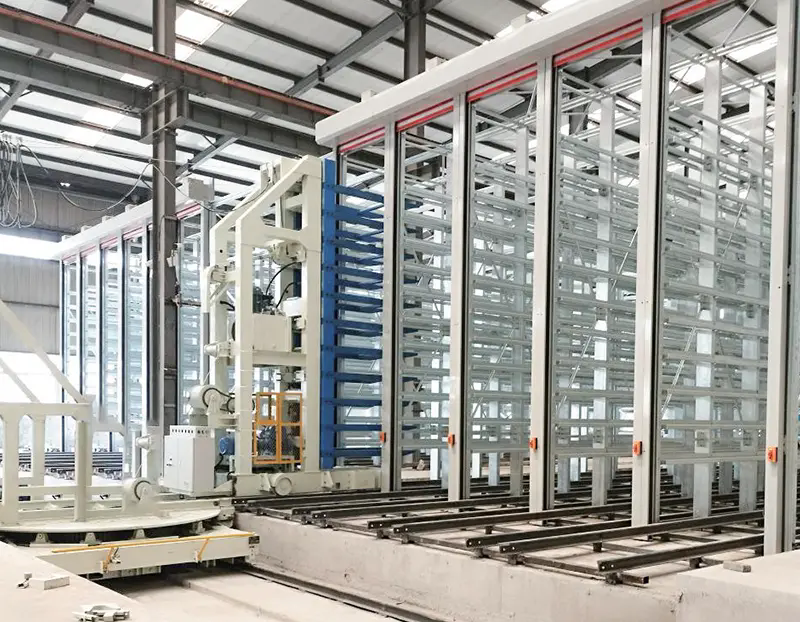
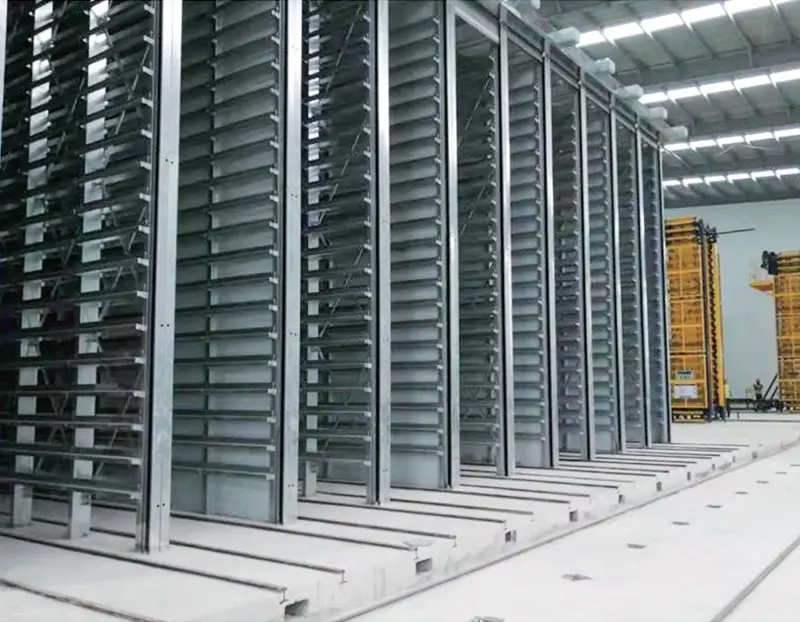
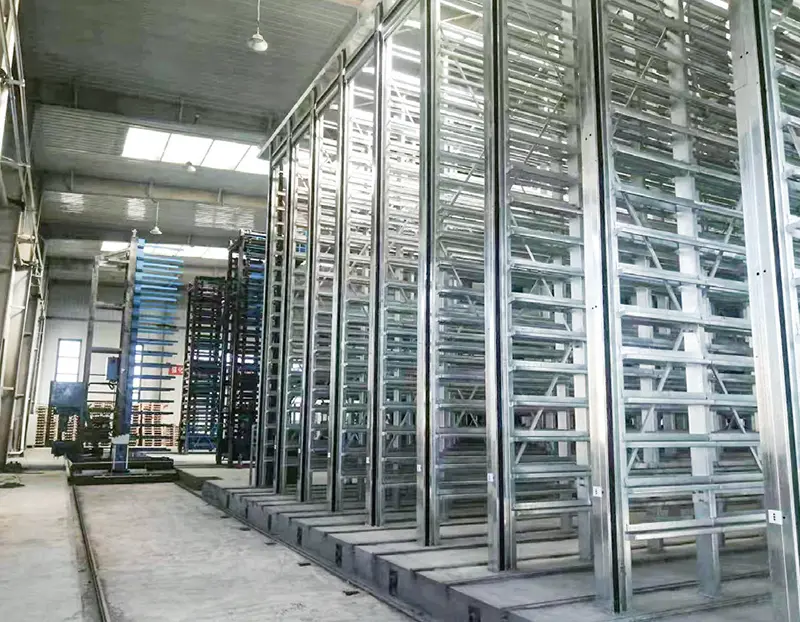
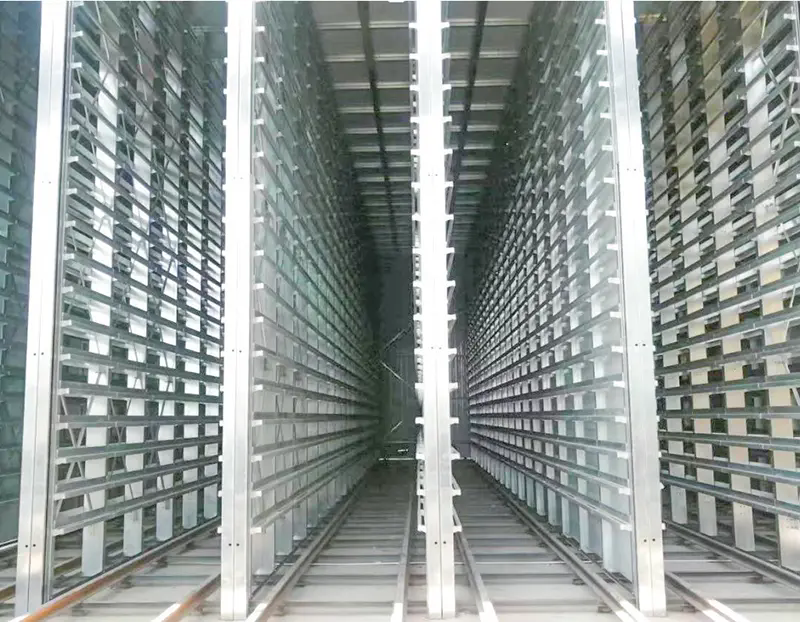
Brick-Concrete Structure Curing Kiln


Table of Contents


1. Where Does the Curing Kiln Sit in the Production Sequence?

The kiln sits immediately after the casting and finishing station and immediately before the stripping station. A panel that has been cast and finished is transferred on its pallet or mold to the kiln, where it remains for a defined curing cycle. When the cycle is complete, the panel is removed, stripped from the mold, and transferred to the finishing or storage area. The mold or pallet then returns to the casting station for the next panel. The kiln therefore acts as a time buffer between the continuous casting operation and the batch stripping operation.

The process walk-through below describes one complete cycle and the handoffs that determine the line's rhythm.

  • Casting and finishing: The panel is cast, vibrated, and finished at the casting station. The surface is leveled and any inserts are positioned. This stage takes a defined time per panel and sets the input rate to the kiln.
  • Transfer into the kiln: The pallet or mold is moved into the kiln by a transfer car, a roller conveyor, or an overhead crane. The transfer time and the kiln door operation are part of the cycle and must be included in the throughput calculation.
  • Curing cycle: The panel is subjected to a controlled temperature and humidity profile. The profile includes a pre-curing or rest period, a heating ramp, a constant temperature hold, and a cooling period. The duration depends on the mix, the panel thickness, and the required stripping strength.
  • Transfer out of the kiln: The cured panel is removed and moved to the stripping station. The kiln chamber is then available for the next batch.
  • Stripping and mold return: The panel is stripped from the mold, and the mold or pallet returns to the casting station. The stripping strength determines whether the panel can be handled without edge damage or surface defects.

This sequence shows why the kiln is a buffer. If the kiln has enough chambers or enough capacity to hold several batches, the casting station can continue working while one batch cures. If the kiln has only one chamber, the casting station must stop while the chamber is occupied, and the line throughput is limited to the kiln cycle time. The choice between a single chamber and a multi-chamber design is therefore a throughput decision, not just a capacity decision.

QUANGONG MACHINERY CO.,LTD designs curing equipment for precast lines with the buffer function in mind, and our team evaluates the casting rate, the stripping rate, and the mold inventory before recommending a chamber count. The goal is to provide a kiln that matches the line, not a kiln that becomes the line's constraint.


2. Which Kiln Types Suit Which Precast Panel Lines?

The kiln type determines the operating flexibility, the energy consumption, and the capital cost. The main types used in precast panel production are the chamber kiln, the tunnel kiln, the carousel system, and the hybrid system. Each type has a different relationship between the curing cycle and the production flow, and the choice depends on the panel range, the production volume, and the site layout. The comparison table below presents the main characteristics of each type.

Kiln Type Operating Principle Typical Panel Range Advantages Limitations
Chamber kiln Batch curing in a closed chamber with steam or hot air Solid walls, sandwich panels, small to medium panels Flexible batch size, low capital cost, simple control Door handling time, batch cycling, manual transfer
Tunnel kiln Continuous passage of pallets through temperature zones Standard panels at high volume Continuous flow, stable temperature profile, high throughput Fixed panel size, high capital cost, long commissioning
Carousel system Pallet circulation through curing stations in a closed loop High volume standard panels Integrated with casting and stripping, minimal handling Complex layout, high automation cost
Hybrid system Chamber for special panels plus tunnel for standard panels Mixed product range Flexibility plus throughput Larger footprint, dual control systems

The trade-off analysis below explains how the choice interacts with the production plan.

  • Product range: A plant that produces a wide range of panel sizes and thicknesses benefits from a chamber kiln because each batch can be loaded with the panels that share a curing profile. A plant that produces a narrow range at high volume benefits from a tunnel kiln because the continuous flow matches the casting rate.
  • Throughput: A tunnel kiln can process a continuous stream of pallets, so the throughput is limited by the kiln length and the conveyor speed. A chamber kiln processes discrete batches, so the throughput is limited by the number of chambers and the cycle time.
  • Capital and operating cost: A chamber kiln has a lower capital cost but a higher labor cost per panel because of the manual loading and unloading. A tunnel kiln has a higher capital cost but a lower labor cost per panel because the transfer is automated.
  • Energy: A tunnel kiln can recover heat from the cooling zone to preheat the incoming panels, which improves the energy efficiency. A chamber kiln releases the heat at the end of each batch unless a heat recovery system is installed.
  • Footprint: A tunnel kiln is long and narrow. A chamber kiln is compact but requires space for the transfer equipment and the mold storage.

Our team at QUANGONG MACHINERY CO.,LTD reviews the product range, the target output, and the site layout with each customer before recommending a kiln type. Our experience is that the chamber kiln remains the most practical choice for plants with a mixed product range and a moderate output, while the tunnel kiln is the better choice for plants that produce a narrow range at high volume. The goal is to match the kiln type to the production plan, not to select the most automated option available.


3. What Parameters Determine the Curing Performance?

The curing performance is determined by the temperature profile, the humidity, the air circulation, the insulation, and the control accuracy. These parameters act together. A kiln with a good temperature profile but poor air circulation will have cold spots and inconsistent panel strength. A kiln with good circulation but poor insulation will have a high energy consumption and a slow heating ramp. The parameter table below presents the typical specification range for a precast panel curing kiln, along with the effect of each parameter on the cured panel.

Parameter Typical Specification Effect on Panel Quality Procurement Check
Maximum curing temperature 60 degrees C to 85 degrees C Higher temperature accelerates strength gain but increases the risk of thermal cracking and delayed ettringite formation Confirm the profile matches the mix design
Temperature uniformity Plus or minus 3 degrees C to plus or minus 5 degrees C Uniform temperature gives uniform strength and surface color Request the uniformity test report
Heating rate 10 degrees C to 20 degrees C per hour Slow heating reduces thermal stress and cracking Confirm the ramp is programmable
Relative humidity 90 percent to 100 percent during the hold High humidity prevents plastic shrinkage and surface drying Confirm the humidity control and measurement
Air circulation Forced circulation with defined air changes Even air flow prevents cold spots and condensation Request the air flow layout
Insulation thickness 100 mm to 150 mm panel Good insulation reduces energy loss and stabilizes temperature Confirm the panel specification
Control accuracy Plus or minus 2 degrees C at the set point Accurate control protects the mix from over or under curing Request the controller specification
Chamber capacity Defined by the pallet count and the panel size Capacity determines the buffer and the throughput Confirm the pallet count and the loading pattern

The parameter interpretation below explains how each specification should be read in a procurement context.

  • Maximum temperature is not a target: A kiln that can reach 85 degrees C does not need to be operated at 85 degrees C. The mix design and the panel thickness determine the maximum safe temperature. The buyer should specify the profile, not the maximum capability.
  • Uniformity is more important than the set point: A kiln that holds 60 degrees C with a uniformity of plus or minus 3 degrees C will produce more consistent panels than a kiln that holds 70 degrees C with a uniformity of plus or minus 10 degrees C. The uniformity test report is the document that shows the real performance.
  • Humidity is part of the profile: A kiln that controls temperature but not humidity will dry the panel surface and cause plastic shrinkage cracks. The buyer should confirm that the humidity is measured and controlled during the hold period.
  • Air circulation is the mechanism behind uniformity: A kiln with a good air flow layout will have a small temperature variation even with a simple heater. A kiln with a poor layout will have cold spots even with a large heater. The air flow layout is a design document that the buyer should request.
  • Insulation determines the energy cost: A kiln with 50 mm insulation will lose more heat than a kiln with 150 mm insulation, and the difference appears in the energy bill over the life of the equipment.

QGM specifies the curing profile and the air flow layout for each kiln we supply, and our factory provides the uniformity and humidity test data with the equipment. The goal is to make the curing performance measurable, so that the buyer can confirm the panel quality before the line is commissioned.


4. How Do Cycle Time and Kiln Capacity Set Line Throughput?

The cycle time and the kiln capacity set the line throughput because the casting station can only produce as fast as the kiln can accept panels, and the stripping station can only process as fast as the kiln can release them. The relationship is simple in principle. The kiln throughput is the number of panels per cycle multiplied by the number of cycles per hour, adjusted for the loading and unloading time. The line throughput is the minimum of the casting rate, the kiln throughput, and the stripping rate. In practice, the relationship is complicated by the batch nature of the chamber kiln and the continuous nature of the casting station.

The worked example below calculates the kiln requirement for a precast panel line with a defined output.

  • Target output: 40 panels per 8-hour shift, or 5 panels per hour.
  • Panel size: 3.0 m by 2.5 m by 0.2 m, cast on a pallet of 3.2 m by 2.7 m.
  • Curing cycle: 8 hours total, including 2 hours of rest, 3 hours of heating and hold, and 3 hours of cooling.
  • Kiln chamber capacity: 12 pallets per chamber, based on a two-tier rack and a chamber length of 18 m.
  • Cycle throughput: 12 pallets per 8-hour cycle equals 1.5 panels per hour for a single chamber.
  • Chambers required: To achieve 5 panels per hour, the line needs 4 chambers of 12 pallets each, or a tunnel kiln with an equivalent continuous capacity.

The throughput interaction table below shows how the kiln capacity affects the line output and the mold inventory requirement.

Kiln Configuration Panels per 8-Hour Cycle Panels per Shift Mold Inventory Requirement Line Implication
2 chambers, 12 pallets each 24 24 24 pallets plus handling margin Insufficient for 40-panel target
4 chambers, 12 pallets each 48 48 48 pallets plus handling margin Meets the 40-panel target with buffer
Tunnel kiln, continuous Continuous 40 to 50 Pallet count matched to kiln length Meets the target with less manual handling

The mold inventory is the hidden cost of kiln capacity. A chamber kiln with a long cycle time requires more pallets and molds because the panels remain in the molds while they cure. A tunnel kiln with a shorter cycle time requires fewer pallets because the panels move through the kiln continuously. The buyer should calculate the mold inventory cost together with the kiln cost, because the two are linked. Our team at QUANGONG MACHINERY CO.,LTD reviews the kiln capacity, the cycle time, and the mold inventory with each customer, and our factory recommends the configuration that meets the output target at the lowest total cost.


5. What Should Buyers Verify Before Ordering a Curing Kiln?

Buyers should verify the kiln as a system that includes the structure, the heating and humidity equipment, the control system, the transfer equipment, and the safety features. The verification checklist below lists the items that should be confirmed before the order is placed.

Verification Item What to Request Acceptance Criterion
Curing profile Temperature, humidity, and ramp profile for the mix Matched to the mix design and the panel thickness
Temperature uniformity Uniformity test report at the operating set point Within the specified tolerance across the chamber
Humidity control Humidity measurement and control description Maintains the required humidity during the hold
Air circulation Air flow layout and fan specification Even flow, no dead zones
Insulation Panel thickness and material data Meets the energy specification
Control system Controller type, recipe storage, data logging Stores the profile and records the cycle data
Transfer equipment Transfer car, conveyor, or crane specification Cycle time matches the kiln cycle
Safety features Door interlocks, over-temperature protection, emergency stop Meets the site safety requirements
Capacity and throughput Pallet count, cycle time, and throughput calculation Meets the line output target

The verification should also include a site visit or a reference installation review. A kiln that performs well in the supplier's factory may perform differently on site because the ambient conditions, the steam supply, and the foundation affect the curing performance. The reference review is the opportunity to speak with an existing user about the actual panel quality and the actual energy consumption. QUANGONG MACHINERY CO.,LTD provides reference installations and invites customers to visit our factory to review the kiln construction and the control system. The goal is to make the verification practical, so that the buyer can confirm the performance before the capital is committed.


6. Frequently Asked Questions (FAQ)

Question 1: How long does a precast panel need to stay in the curing kiln?
Answer: The curing time depends on the panel thickness, the mix design, and the required stripping strength. A typical cycle for a 200 mm wall panel is 8 to 12 hours, including the rest period, the heating and hold period, and the cooling period. A thinner panel may cure in 6 to 8 hours. The cycle should be defined by the mix design and verified by the stripping strength test, not by a generic rule.

Question 2: What is the difference between a curing kiln and a curing chamber?
Answer: The terms are often used interchangeably in the precast industry. A curing kiln is a large structure that may contain one or several chambers. A curing chamber is a single enclosed volume within the kiln. A chamber kiln contains one or more chambers, while a tunnel kiln contains a continuous passage. The buyer should confirm the terminology used by the supplier and the actual configuration that is being quoted.

Question 3: Can a curing kiln be used for both steam curing and hot air curing?
Answer: Many kilns are designed for steam curing and can also operate with hot air or a combined system. The choice depends on the available heat source and the required humidity. Steam curing provides both heat and humidity, which is beneficial for the panel surface. Hot air curing provides heat but requires a separate humidification system. The buyer should confirm the heat source and the humidity control with the supplier.

Question 4: How does the kiln capacity affect the mold inventory?
Answer: The kiln capacity and the cycle time determine how many molds and pallets are occupied at any moment. A longer cycle or a smaller kiln requires more molds and pallets because the panels remain in the molds while they cure. The mold inventory cost should be included in the kiln selection, because a lower-cost kiln with a long cycle may require a larger mold investment than a higher-cost kiln with a short cycle.

Question 5: What temperature uniformity should I require from a precast panel curing kiln?
Answer: A typical requirement is plus or minus 3 degrees C to plus or minus 5 degrees C across the chamber at the operating set point. A tighter uniformity gives more consistent panel strength and surface color. The buyer should request the uniformity test report and confirm the measurement locations. A kiln that meets the uniformity requirement at the center of the chamber but not at the corners is not providing uniform curing.


7. Conclusion

The curing kiln plays a central role in a precast panel production line because it controls the strength gain, the surface quality, and the production flow. The kiln type, the temperature and humidity profile, the air circulation, and the capacity all interact with the casting rate and the stripping rate. A buyer who specifies the kiln as a heated chamber will find that the line's throughput is set by the kiln's cycle time, and the mold inventory is set by the kiln's capacity. A buyer who specifies the kiln as a system, matched to the mix, the panel range, and the output target, will have a line that runs at its design rate. QUANGONG MACHINERY CO.,LTD designs and supplies curing equipment for precast panel production lines, and our team supports customers with profile development, uniformity testing, and capacity planning. If you are planning a precast panel line or upgrading a curing kiln, contact our team to discuss the profile, the capacity, and the verification plan for your application.


Contact QUANGONG MACHINERY CO.,LTD today to discuss your Curing Kiln requirements and to request the profile, capacity, and uniformity data for your precast panel production line.

Related News
Leave me a message
X
We use cookies to offer you a better browsing experience, analyze site traffic and personalize content. By using this site, you agree to our use of cookies. Privacy Policy
RejectAccept