News

What Is a Brick Machine With Rack Maintenance System and How Does It Support Reliable Block Production?

2026-09-17 0 Leave me a message

A brick machine with rack maintenance system combines brick forming, material handling, rack storage, curing support, and equipment maintenance into a more organized production workflow. For block manufacturers, this approach can help reduce unnecessary handling, simplify routine inspections, protect fresh products, improve workspace utilization, and maintain more consistent production conditions. This guide explains the system structure, maintenance requirements, rack management, common problems, operating practices, and purchasing considerations for manufacturers planning or upgrading a concrete brick production line.

 brick machine with rack maintenance system


Table of Contents

  1. What Is a Brick Machine With Rack Maintenance System?
  2. Why Does Rack-Based Maintenance Matter in Brick Production?
  3. How Is the System Structured?
  4. How Does the Production and Maintenance Workflow Work?
  5. What Maintenance Tasks Should Operators Perform?
  6. How Should Curing Racks Be Managed?
  7. What Common Problems Can Affect the System?
  8. How Can Manufacturers Improve Production Efficiency?
  9. What Should Buyers Check Before Installation?
  10. Practical Maintenance Checklist
  11. Frequently Asked Questions
  12. Building a More Reliable Brick Production Process

What Is a Brick Machine With Rack Maintenance System?

A Brick Machine With Rack Maintenance System is a production configuration designed to connect brick or concrete block forming with organized handling, rack storage, curing support, inspection, and equipment maintenance.

In a conventional production environment, fresh blocks leave the forming machine and must be transported to a suitable curing location. If pallets, racks, forklifts, conveyors, and maintenance areas are poorly coordinated, the production line can experience unnecessary movement, product damage, congestion, and avoidable downtime.

A rack-based configuration provides a structured way to manage freshly formed products while also making the surrounding production process easier to inspect and maintain. Modern automatic block production lines may integrate pallet feeding, block transfer, curing racks, transportation equipment, stacking, and finished-product handling into one coordinated workflow. :contentReference[oaicite:0]{index=0}

The exact configuration should depend on block dimensions, production capacity, curing requirements, available factory space, automation level, and local operating conditions. A rack system should therefore be considered part of the complete production line rather than an isolated accessory.


Why Does Rack-Based Maintenance Matter in Brick Production?

Concrete brick and block production involves vibration, hydraulic pressure, aggregate, cement dust, moisture, moving mechanical components, and repeated material handling. These conditions naturally create opportunities for wear, contamination, loosening, and alignment problems.

Routine cleaning, lubrication, inspection, tightening, and adjustment are widely recommended for brick-making equipment because material accumulation and component wear can affect forming accuracy and machine reliability. :contentReference[oaicite:1]{index=1}

Production Challenge Possible Consequence Useful Management Approach
Rack congestion Slow material movement and difficult access Plan rack capacity and transportation routes
Material residue Mold contamination and dimensional problems Clean molds, hoppers, pallets, and transfer areas regularly
Loose fasteners Vibration-related instability or component wear Perform scheduled inspections and tightening
Hydraulic problems Inconsistent forming or machine downtime Monitor oil condition, pressure, hoses, and connections
Poor rack alignment Handling difficulty and potential product damage Inspect rack positioning and transfer paths

The objective is not simply to repair equipment after a failure. A practical maintenance system aims to identify small abnormalities before they develop into production interruptions.


How Is the System Structured?

The exact configuration varies between manufacturers, but a rack-supported brick production line can contain several interconnected areas.

  • Brick or block forming machine: Forms concrete products using controlled feeding, vibration, pressing, and demolding.
  • Hydraulic system: Provides hydraulic power for relevant forming and movement functions.
  • Mold and pressure head: Directly determine the shape and dimensions of the manufactured product.
  • Pallet handling system: Supplies and transports pallets for fresh products.
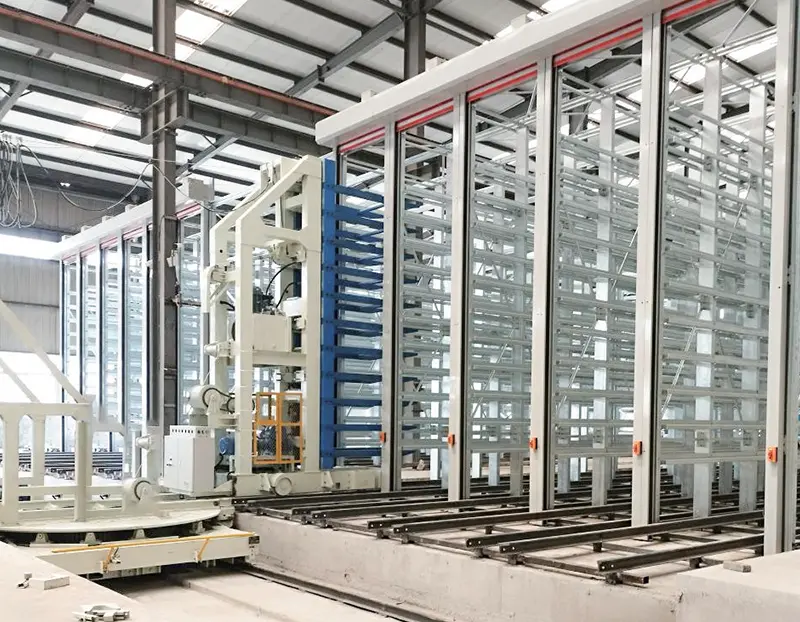
  • Transfer equipment: Moves freshly formed blocks toward racks or curing areas.
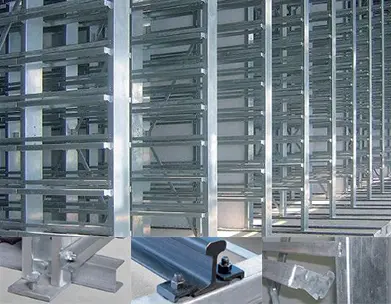
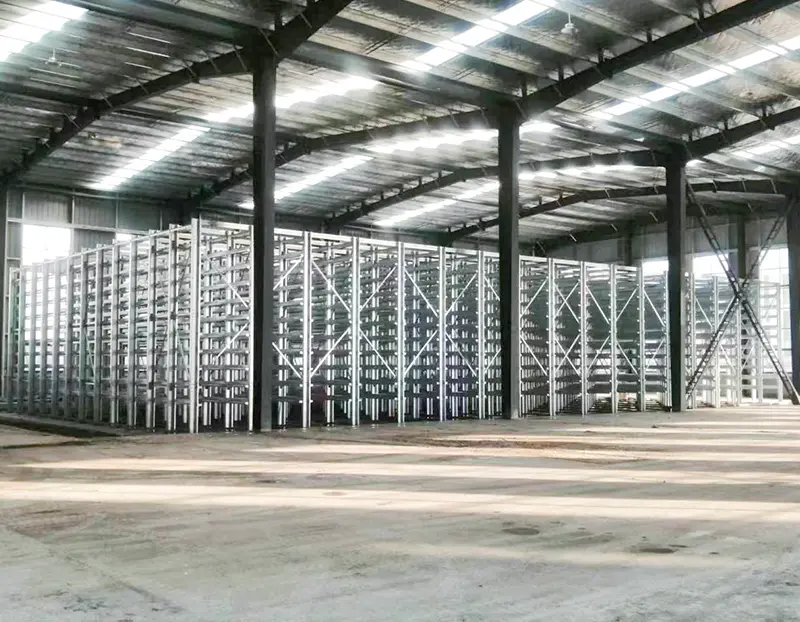
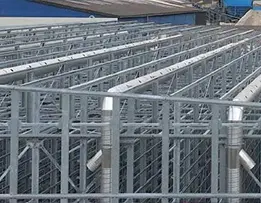
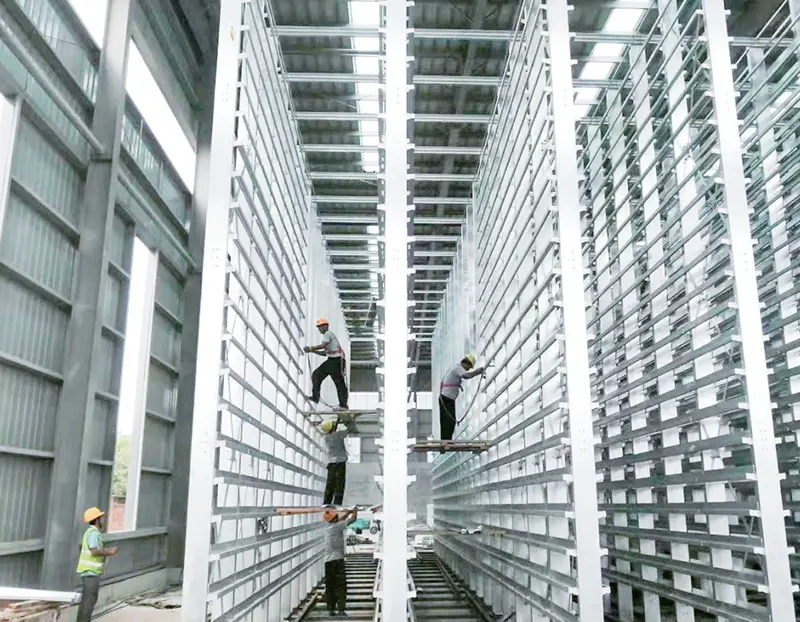
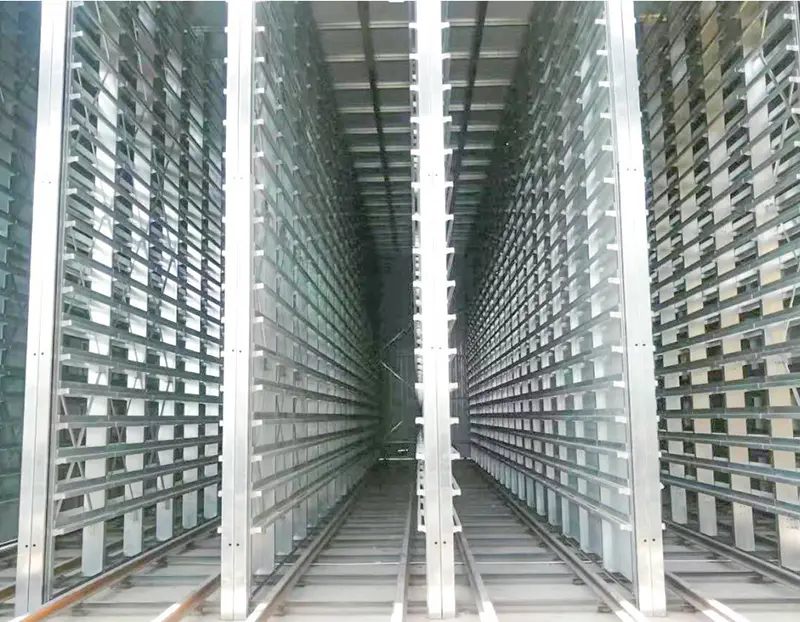
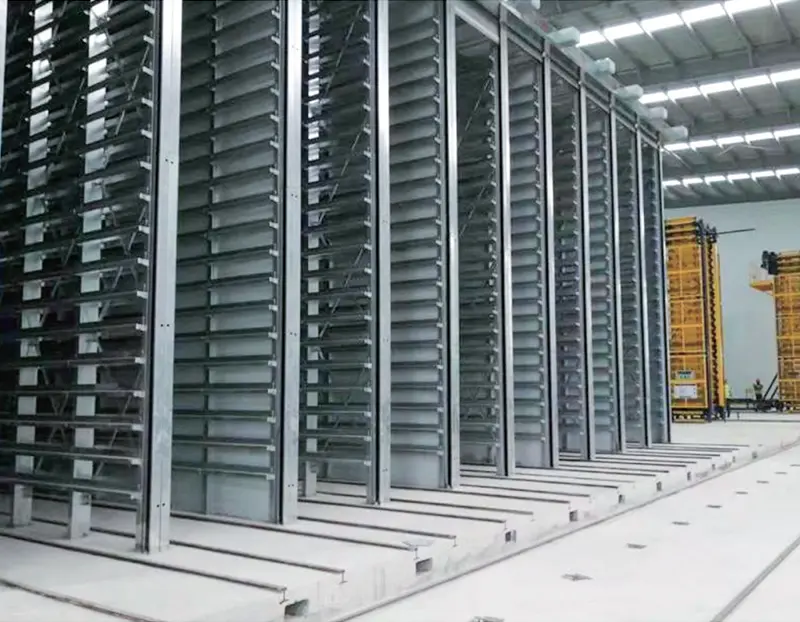
  • Curing racks: Organize products vertically or in multiple levels to make better use of factory space.
  • Curing environment: May incorporate controlled temperature, humidity, airflow, or other process conditions depending on the production method.
  • Maintenance area: Provides space for inspection, cleaning, lubrication, mold servicing, spare-part management, and repair.

Some industrial configurations use multi-level curing racks and automatic transfer equipment to connect the forming machine with the curing process. This can reduce manual handling and create a more continuous material flow. :contentReference[oaicite:2]{index=2}


How Does the Production and Maintenance Workflow Work?

A well-organized workflow should allow production, curing, material movement, inspection, and maintenance to support one another rather than compete for the same space.

  1. Raw material preparation: Cement, aggregates, water, pigments, or other approved ingredients are prepared according to the product formulation.
  2. Mixing: Materials are mixed to achieve the required consistency.
  3. Feeding: The concrete mixture enters the brick machine through the feeding system.
  4. Forming: Vibration and pressing compact the mixture inside the mold.
  5. Initial handling: Fresh products are transferred carefully to avoid deformation or edge damage.
  6. Rack placement: Products are organized in designated rack positions.
  7. Curing: Products remain under the specified curing conditions for the required period.
  8. Rack unloading: Cured products are transferred for stacking, inspection, packaging, or dispatch.
  9. Pallet return: Empty pallets are collected and returned to the production line.
  10. Inspection and maintenance: Operators check the machine, racks, transfer equipment, and related components according to the maintenance schedule.

Rack and pallet circulation is particularly important in automatic lines. Poorly planned routes can cause congestion, delay pallet return, and eventually interrupt the forming machine even when the main machine itself remains operational. :contentReference[oaicite:3]{index=3}


What Maintenance Tasks Should Operators Perform?

Maintenance should follow the equipment manufacturer's instructions, safety procedures, lubricant specifications, and component requirements. The following framework can help operators establish a practical routine.

Daily Maintenance
  • Remove concrete residue from molds, pressure heads, hoppers, conveyors, and other working surfaces.
  • Inspect visible hydraulic hoses, fittings, and connections for leakage.
  • Check lubrication points according to the manufacturer's lubrication schedule.
  • Inspect important bolts, guards, and connections for looseness.
  • Check pallets for damage or excessive contamination.
  • Observe unusual noise, vibration, heat, or movement during operation.
  • Keep the rack transfer area clean and free from unnecessary obstacles.

Daily inspection and cleaning are commonly emphasized because hardened concrete residue can interfere with machine accuracy and increase wear. :contentReference[oaicite:4]{index=4}

Weekly Maintenance
  • Inspect conveyor and transmission components.
  • Check belt or chain tension where applicable.
  • Inspect vibration-system mounting points.
  • Check hydraulic oil condition and relevant filters according to the manufacturer's requirements.
  • Inspect electrical connections after safely isolating power.
  • Check rack alignment, structural condition, and transfer routes.
  • Review maintenance records for recurring abnormalities.
Periodic Maintenance

Periodic servicing should include deeper inspection of molds, hydraulic components, electrical controls, vibration systems, bearings, transmission components, sensors, and other wear parts. Mold wear deserves particular attention because damaged or deformed mold components can influence product dimensions and surface quality. :contentReference[oaicite:5]{index=5}


How Should Curing Racks Be Managed?

Rack management is more than simply placing blocks into available spaces. The rack layout should correspond to production capacity, curing duration, product dimensions, pallet specifications, handling equipment, and available floor and ceiling space.

Rack Management Factor What to Check
Capacity Can the rack system accommodate the expected production volume?
Dimensions Are rack levels compatible with pallet and product dimensions?
Access Can transfer equipment safely reach every required position?
Alignment Are rack positions stable, level, and properly aligned?
Circulation Can full and empty pallets move without interfering with other operations?
Inspection Can operators easily identify damaged racks or pallets?

Freshly molded concrete blocks are particularly sensitive to rough handling because they have not yet developed their final strength. Proper rack positioning and controlled movement can therefore help reduce unnecessary mechanical stress during the early curing stage. Curing conditions themselves should be established according to the product formulation, applicable standards, and equipment manufacturer's process recommendations.


What Common Problems Can Affect the System?

Several recurring problems can be addressed through systematic inspection.

1. Concrete Accumulation

Concrete residue can harden on molds, pressure heads, conveyors, and feeding components. If not removed, buildup may interfere with movement and forming accuracy. Regular cleaning after production is therefore an important basic task.

2. Mold Wear

Molds experience repeated mechanical loading and contact with abrasive materials. Wear can gradually affect product dimensions, corners, surfaces, and consistency. Operators should establish inspection criteria for identifying when a mold requires repair or replacement.

3. Hydraulic Leakage

Hydraulic hoses, fittings, seals, and connections should be inspected regularly. Oil leakage should not be ignored because it can indicate component deterioration and may create a workplace safety hazard.

4. Abnormal Vibration

Vibration is essential to the forming process, but abnormal vibration may indicate loose fasteners, mechanical wear, alignment problems, bearing issues, or other faults. Operators should stop and inspect the equipment according to the manufacturer's safety procedure when abnormal conditions occur.

5. Rack Misalignment

Misaligned racks can make automated or manual transfer more difficult. Regular inspection of rack foundations, levels, structural members, and transfer paths can help identify problems before they affect material flow.

6. Insufficient Pallet Circulation

A production line may have adequate forming capacity but still experience interruptions if pallets do not return at the required rate. Pallet quantity should therefore be planned together with production cycle time, curing time, rack capacity, cleaning requirements, and an appropriate operating margin. :contentReference[oaicite:6]{index=6}


How Can Manufacturers Improve Production Efficiency?

Efficiency is not determined by machine speed alone. The complete material flow has to remain balanced.

  • Match rack capacity to output: Avoid designing the rack area around machine output alone. Include curing time and product turnover.
  • Shorten unnecessary movement: Place racks, pallet circulation, and transfer equipment logically around the forming area.
  • Separate traffic routes: Where possible, avoid conflicts between forklifts, raw-material handling, fresh blocks, and empty pallets.
  • Standardize inspections: Use checklists so operators inspect the same critical points consistently.
  • Track recurring faults: Repeated problems may indicate an underlying mechanical, electrical, hydraulic, or operational issue.
  • Keep spare parts available: Common wear components should be managed according to actual equipment requirements and supplier recommendations.
  • Train operators: Operators should understand normal machine sounds, movements, lubrication points, emergency procedures, and abnormal-condition reporting.

Preventive maintenance is particularly useful because small problems can often be identified before they become production-stopping failures. A documented maintenance history also provides useful information when planning replacement parts and servicing intervals. :contentReference[oaicite:7]{index=7}


What Should Buyers Check Before Installation?

When selecting a brick machine with rack maintenance system, buyers should evaluate the complete production requirement instead of comparing only machine output.

Evaluation Area Key Questions
Product range What brick, block, paver, or related concrete products will be manufactured?
Production capacity What daily or hourly output is required?
Rack capacity How many pallets and curing positions are required?
Factory layout Is there sufficient height, floor area, and transportation access?
Automation Which stages should be automatic and which will remain manual?
Maintenance Can operators safely access critical components for inspection and servicing?
After-sales support Are technical documentation, spare parts, training, and service available?

For an industrial installation, rack height, rack quantity, pallet dimensions, curing duration, transfer equipment, and factory circulation should be calculated together. An integrated layout can help prevent bottlenecks that may otherwise appear after the machine has already been installed.


Practical Maintenance Checklist

A simple checklist can make daily operation more consistent.

Item Daily Weekly Periodic
Mold and pressure head cleaning ✓ Detailed inspection
Hydraulic inspection ✓ Visual check ✓ According to manual
Lubrication ✓ Where specified ✓ Review ✓ Full service
Fasteners ✓ Visual ✓ Detailed
Rack condition ✓ Visual ✓ Structural inspection
Electrical components ✓ Observe operation ✓ Qualified inspection
Maintenance records ✓ Review ✓ Analyze trends

Important: Maintenance frequency should always be adjusted according to the specific machine design, working hours, production materials, environmental conditions, and manufacturer's technical documentation. Power, hydraulic pressure, and other hazardous systems should only be serviced by appropriately trained personnel following proper isolation procedures.


Frequently Asked Questions

What is the main purpose of a brick machine with rack maintenance system?

Its purpose is to coordinate brick forming, product handling, rack storage or curing, pallet circulation, inspection, and equipment maintenance within a more organized production workflow.

Does a rack system improve brick quality?

A rack system does not independently determine product quality. However, organized handling can help reduce unnecessary movement of fresh blocks, while controlled curing conditions and consistent production procedures can support more predictable results.

How often should a brick machine be maintained?

Basic cleaning and inspection are normally performed every production shift, while lubrication, fastening checks, hydraulic inspection, electrical inspection, and deeper servicing follow the manufacturer's recommended schedule and actual operating conditions.

Why is mold maintenance important?

The mold directly influences the shape and dimensions of the finished product. Wear, deformation, residue, or damage can affect product consistency and should therefore be identified early.

What should be checked on curing racks?

Operators should check rack alignment, structural condition, stability, accessible transfer paths, pallet positioning, and any signs of deformation or damage.

Can a rack system be integrated into an automatic production line?

Yes. Automatic block production lines can combine pallet feeding, block transfer, multi-level curing racks, transportation equipment, stacking, and pallet return. The precise configuration depends on the required capacity and factory layout. :contentReference[oaicite:8]{index=8}

How can manufacturers reduce unexpected downtime?

Use scheduled inspections, keep equipment clean, monitor abnormal sounds and vibration, maintain lubrication, inspect hydraulic and electrical systems, record recurring faults, and replace worn components according to appropriate service criteria.


Building a More Reliable Brick Production Process

A Brick Machine With Rack Maintenance System should be viewed as a complete production concept rather than simply a brick-making machine combined with storage racks. The forming machine, molds, hydraulic system, pallets, transfer equipment, curing area, racks, maintenance procedures, and operator workflow all influence the overall performance of the production line.

For manufacturers, the most practical approach is to establish a balanced system in which fresh products can move smoothly from forming to curing, pallets can return efficiently, maintenance personnel can access critical components safely, and operators can identify abnormalities before they become major production interruptions.

QUANGONG MACHINERY CO.,LTD can provide professional solutions for manufacturers planning concrete block and brick production projects, including equipment configuration, production-line planning, rack-related handling arrangements, and technical support based on project requirements.

If you are planning a new brick production line or upgrading an existing facility, contact us to discuss your product types, production capacity, factory layout, automation requirements, and rack maintenance needs.

Related News
Leave me a message
X
We use cookies to offer you a better browsing experience, analyze site traffic and personalize content. By using this site, you agree to our use of cookies.Privacy Policy
RejectAccept